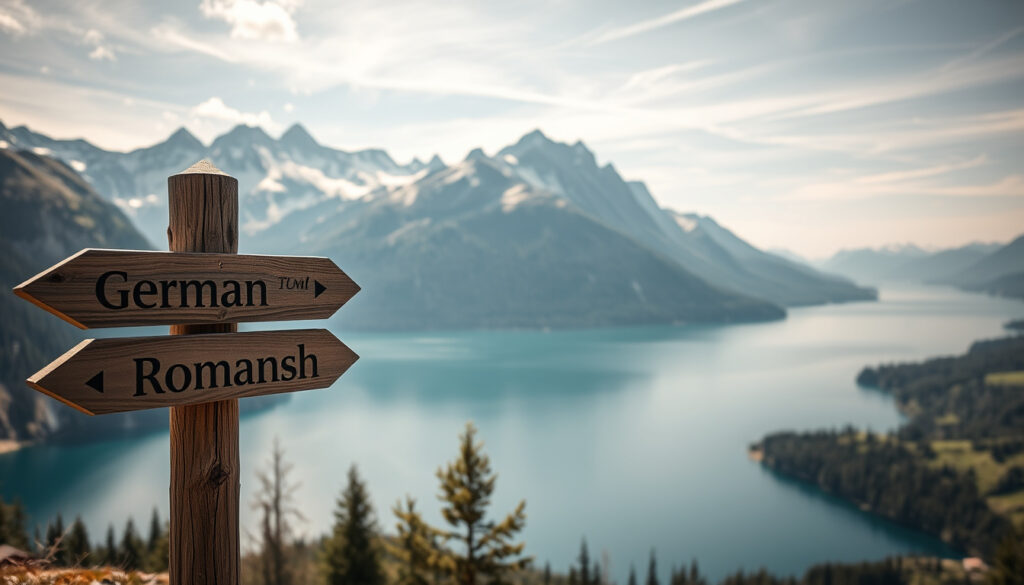
What Language Do They Speak in Switzerland? Full Guide
Switzerland packs four national languages into a country smaller than Maryland — and most visitors never see that coming. If you’re headed to Zurich, Geneva, or the Alps and wondering whether you’ll need more than English to get by, the short answer is reassuring, but the full picture is more interesting. Switzerland’s language landscape isn’t just a quirky footnote; it’s woven into how the country governs itself, educates its children, and keeps its peace.
Official languages: German, French, Italian, Romansh ·
Most spoken language: German (Swiss German dialects) ·
National languages status: Equal constitutional status ·
Multilingual cantons: Bern, Fribourg, Valais, Graubünden ·
English usage: Widely understood in tourism and business
Quick snapshot
- Four official languages enshrined in constitution (Wikipedia – Languages of Switzerland)
- German dominates at home for 62.3% of residents (Wikipedia – Languages of Switzerland)
- Multilingualism is a constitutional principle (Swiss Federal Department of Foreign Affairs)
- Exact English proficiency rates by canton (no published canton-level data)
- Impact of immigration on language demographics post-2020
- Current 2026 census data on language use (unavailable)
- German, French, Italian formally recognized (Babbel language guide)
- Romansh national status: 1938; federal official status: 1996 (Babbel language guide)
- Nearly two-thirds of Swiss residents already speak more than one language weekly (Swiss Federal Department of Foreign Affairs)
- English remains common but unofficial in business and tourism (Swiss Federal Department of Foreign Affairs)
Switzerland’s constitution maps four language communities onto 26 cantons with striking asymmetry in speaker numbers but formal equality in status. The table below captures the key figures from the 2020 federal census.
| Attribute | Value |
|---|---|
| National languages | German, French, Italian, Romansh |
| Most common at home | Swiss German dialects (62.3% in 2020) |
| English role | Common second language, not official |
| Bilingual cantons | Bern (German-French), Fribourg, Valais, Graubünden |
| French speakers | 22.8% at home |
| Italian speakers | 8% at home |
| Romansh speakers | 0.5% at home |
| German-speaking cantons | 17 of 26 |
What language is mostly spoken in Switzerland?
Swiss German dialects dominate the country’s linguistic landscape. According to the 2020 census, 62.3% of Switzerland’s residents spoke German as their primary home language (Wikipedia – Languages of Switzerland). That figure climbs to roughly 70% when including people who use German professionally, making it the undisputed leader in everyday and workplace settings alike.
Swiss German dominance
Swiss German isn’t a single dialect — it’s a family of Alemannic varieties spoken across the central, northern, and eastern parts of the country. Canton to canton, you’ll hear distinct differences. A Zurich resident and a Bern resident both speak “Swiss German,” but the sounds and slang diverge noticeably. What unites them is their mutual unintelligibility with Standard German; written German is the norm for official documents, education, and media, but casual conversation among locals runs in dialect.
The government portal from the Swiss Federal Department of Foreign Affairs notes that Swiss German is the most common language in workplaces, followed by Standard German, French, English, and Italian (Swiss Federal Department of Foreign Affairs). This ranking reflects both native speakers and the multilinguistic competence many Swiss develop growing up.
Regional variations
German Switzerland covers the lion’s share of cantons — 17 of Switzerland’s 26, including Zurich, Bern, Basel, Lucerne, and St. Gallen (Relocation Genevoise expat guide). But Switzerland doesn’t neatly partition its languages. Bern, Fribourg, Valais, and Graubünden are officially multilingual cantons, where two or even three national languages share formal standing (Swiss Federal Department of Foreign Affairs).
The trilingual Canton of Graubünden (Grisons) is the most striking example: its official documents appear in German, Italian, and Romansh, with each language dominant in different valleys. Biel/Bienne, the bilingual city in the Bernese Jura, conducts municipal business in both German and French simultaneously (Swiss Federal Department of Foreign Affairs).
What are the official languages of Switzerland?
Switzerland has four national languages: German, French, Italian, and Romansh. These aren’t just historical relics or informal categories — they’re constitutionally enshrined and govern how the federal government, courts, and schools operate. The Swiss Federal Constitution named German, French, and Italian as national languages in 1848, and Romansh gained formal recognition later (Babbel language guide).
German
German holds the plurality position in Switzerland — but it’s a specific kind of German. Standard German (Hochdeutsch) serves for writing, federal legislation, and national media. Swiss German dialects, however, dominate spoken communication in German-speaking Switzerland. This split is so pronounced that foreigners who studied German in school often find Swiss German nearly incomprehensible in casual conversation. The Swiss government notes that in workplace settings, Swiss German edges out Standard German as the preferred spoken language (Swiss Federal Department of Foreign Affairs).
French
French-speaking Switzerland (Romandy) encompasses Geneva, Vaud, Neuchâtel, Jura, and parts of Bern, Fribourg, and Valais (Alphatrad language overview). Roughly 22.8% of residents call French their home language — a figure that includes the bilingual city of Biel/Bienne and the multilingual cantons that straddle the language border. Swiss French differs little from Standard French in vocabulary or grammar, though regional expressions and accent vary by canton.
Italian
Italian holds its own in the southern Ticino canton and the Italian-speaking valleys of Graubünden. At home, about 8% of the Swiss population speaks Italian (Wikipedia – Languages of Switzerland). The Ticino region is notably Italian in character — road signs, shops, and public services operate in Italian, and the major cities of Lugano and Locarno feel thoroughly Italian despite being politically Swiss. Ticino’s proximity to Milan makes cross-border cultural ties natural.
Romansh
Romansh is Switzerland’s smallest national language by far. Only 0.5% of the population speaks it at home, concentrated in the southeastern canton of Graubünden (Wikipedia – Languages of Switzerland). Romansh has four main dialects — Sursilvan, Sutsilvan, Surmiran, and Puter — each spoken in different valleys, though these are increasingly unified under the standardized “Romansh Grischun” for official federal communication (Wikipedia – Languages of Switzerland).
The Swiss Federal Constitution recognized Romansh as a national language in 1938 and elevated it to official language status for federal dealings in 1996 (Babbel language guide). Its legal standing is slightly different from German, French, and Italian: federal authorities must communicate with Romansh speakers in their language, but Romansh isn’t used in federal parliament debates or national legislation in the same way as the other three.
Switzerland spends constitutional energy protecting a language spoken by fewer than 40,000 people. Romansh’s official recognition isn’t symbolic — it guarantees federal funding for Romansh-language schools, media, and cultural institutions in Graubünden. For a country that prides itself on linguistic balance, that’s a meaningful commitment.
Is English spoken in Switzerland?
English is not an official language of Switzerland — you won’t find it on currency, federal forms, or road signs. But here’s what matters for practical purposes: English is widely understood in business, tourism, and international settings. The Swiss EDA, the government’s foreign affairs department, notes that “English is not an official language but widely used in business and international contexts” (Swiss Federal Department of Foreign Affairs).
English in daily life
Most Swiss people in cities and tourist areas speak at least some English, and many speak it fluently. The country’s strong secondary education system — which typically requires students to learn a second national language plus English — creates high proficiency levels. Nearly two-thirds of Switzerland’s residents report speaking more than one language on a weekly basis (Swiss Federal Department of Foreign Affairs), which means English often sits alongside German, French, or Italian in a multilingual individual’s repertoire.
That said, English proficiency varies by region and sector. In Zurich’s international banks or Geneva’s multinational organizations, English may dominate workplace meetings even among Swiss nationals. In rural Ticino, you might encounter fewer English speakers among older residents. The Swiss workplace language survey shows English ranking fourth after Swiss German, Standard German, and French — notable, but clearly secondary to the national languages (Swiss Federal Department of Foreign Affairs).
Tourism and business
Tourism-facing businesses — hotels, restaurants near attractions, train station services — typically staff English speakers. Swiss tourism infrastructure is geared toward international visitors, and you’ll find English signage at airports, major train stations, and popular hiking areas. The Swiss Federal Railways (SBB/CFF) provides English information services at key hubs.
In business contexts, large multinationals in Zurich, Basel, and Geneva operate in English internally. For an expat working at a global pharmaceutical firm or financial institution, English may be the de facto office language. But once you step outside the corporate campus into local government, healthcare, or retail, the national languages reclaim their primacy.
English speakers can navigate Switzerland without speaking a word of German, French, or Italian — especially in cities and tourist zones. But the deeper you go into Swiss life (renting an apartment, dealing with local bureaucracy, making friends in a residential neighborhood), the more the national languages matter. Picking up even basic phrases signals respect and opens doors that English alone won’t.
How do you say hello in Swiss?
“Hello” depends entirely on which part of Switzerland you’re in. The country’s four-language geography means four different greetings, and which one is appropriate depends on whether you’re in Zurich, Geneva, Lugano, or the Romansh valleys of Graubünden.
Greetings in Swiss German
In German-speaking Switzerland, the standard greeting is Gruezi (sometimes spelled “Grüezi”) — a Swiss German word that evolved from the Standard German “Grüß Gott.” You’ll hear it everywhere from Zurich to Bern to St. Gallen. It’s informal enough for shops and cafes, formal enough for meeting strangers. For a more casual or regional flavor, younger speakers in Zurich might say Salü, influenced by French, or simply Hoi.
Other useful Swiss German phrases: Merci viilmol (thank you very much), Uf wiederluege (goodbye, literally “until we see each other again”). These aren’t found in German textbooks — they’re Swiss inventions that locals appreciate hearing from newcomers.
French and Italian hellos
In French-speaking Switzerland, Bonjour works as the default, just as in France — but in Geneva and the Romandy cantons, you’ll hear Salut among younger people and Bonsoir after around 6 PM. In Italian-speaking Ticino, the greeting is Ciao (informal) or Buongiorno (formal), matching Italian conventions. In Romansh-speaking valleys of Graubünden, greetings vary by dialect: Bun di in Sursilvan, Bon di in Surmiran.
The trilingual complexity of Graubünden means you might hear three or four different language greetings within a single day’s travel through its valleys. Swiss people are accustomed to this — and most will switch to whatever language their conversation partner is using without comment.
The right greeting does more than break the ice — it signals to Swiss locals that you’re aware of regional differences. A visitor who walks into a Zurich shop and opens with Bonjour announces they’re not from around here. Using Gruezi in German Switzerland or Ciao in Ticino shows you did your homework, and Swiss people notice. It’s a small gesture with disproportionate goodwill attached.
Can I go to Switzerland if I only speak English?
Yes — for tourism, the answer is straightforward. Switzerland is a globally oriented country that receives millions of international visitors annually, and its infrastructure is calibrated for non-Swiss speakers. You can book hotels, ride the Glacier Express, order food, and navigate airports entirely in English without significant friction.
Travel feasibility
Major tourist destinations, international hotels, and airport areas in Zurich, Geneva, Basel, and Interlaken maintain English as a working language for customer-facing staff. Swiss tourism websites publish extensively in English, German, French, and Italian, with English often the default for international marketing.
Swiss public transportation is famously multilingual. Train station displays, ticket machines, and SBB mobile apps offer English interface options. The famed Swiss travel pass system and most tourist-oriented railways (Jungfraubahnen, Matterhorn Gotthard Bahn) provide English-language signage and audio announcements.
Regional tips
Tourist-heavy zones in Zurich and Geneva will present minimal English barriers. The situation shifts if you’re venturing into rural areas, smaller towns off the beaten path, or Italian-speaking Ticino outside the major cities of Lugano and Locarno. In these settings, you may encounter older residents or local business owners with limited English — though most will find a way to assist.
If you’re planning to live in Switzerland rather than visit, English alone creates practical obstacles. Renting an apartment, signing up children for school, interacting with local health services, and understanding municipal mail all require navigating the local official language. Most cantonal governments provide some English information online, but official communications — court summons, tax documents, school enrollment forms — arrive in the canton’s official language(s).
The gap between visiting and living in Switzerland is the real test of English’s sufficiency. A week of sightseeing demands no local language. A year of residency — with its lease agreements, health insurance paperwork, and parent-teacher meetings in a Bernese school — means you’ll need at least one national language in practice, even if not in law. English-speaking expats who invest in language learning within their first year report significantly smoother integration.
Multilingualism is a fundamental aspect of Switzerland’s identity and is enshrined in law.
— Swiss Federal Department of Foreign Affairs (official government publication)
Romansh has been recognized as one of four ‘national languages’ by the Swiss Federal Constitution since 1938.
— Wikipedia: Languages of Switzerland (comprehensive language census data)
Switzerland’s linguistic architecture reflects a deliberate national bargain: four language communities agreed to share a country, and that compromise is written into the constitution, the school system, and the federal civil service. Romansh’s inclusion — despite speaking by less than 0.5% of the population — shows how seriously the Swiss take the principle that every language community deserves protection, not just the numerically dominant ones.
The practical implication is that Switzerland functions as a de facto multilingual society even in monolingual-canton contexts. When a Bernese resident deals with the federal government, they encounter French and Italian in official communications alongside German. When a student in Graubünden attends a public school, instruction may be available in German, Italian, or Romansh depending on their valley. This built-in linguistic flexibility means even English-speaking newcomers absorb exposure to other national languages by proximity.
Clarity on what we know — and what we don’t
Confirmed facts
- Switzerland has four official national languages: German, French, Italian, Romansh
- German-speaking residents represent 62.3% of the population (2020 census)
- French is spoken at home by 22.8% of residents
- Four cantons are officially multilingual: Bern, Fribourg, Valais, Graubünden
- English is widely used but holds no official status
- German, French, and Italian have equal constitutional status since 1848
- Romansh gained official federal recognition in 1996
What’s unclear
- Exact English proficiency rates broken down by canton
- Current 2026 census data on language shifts post-pandemic
- Impact of recent immigration on linguistic demographics
- Whether any canton is considering English as a supplementary official language
Related reading: Google Translate English to Spanish · Google Translate English Spanish guide
globalpeopletransitions.com, geo.northeastern.edu, polilingua.com
Switzerland’s linguistic patchwork finds parallels in Belgiums Dutch French German mix, where Dutch prevails in Flanders, French in Wallonia, and German in the east.
Frequently asked questions
What language do they speak in Switzerland Zurich?
Zurich is in German-speaking Switzerland, where Swiss German dialects are the dominant home and workplace language. You’ll hear Gruezi for greetings and encounter Standard German in writing. English is common in international business settings but not in daily commerce.
What language do they speak in Switzerland Geneva?
Geneva is in French-speaking Romandy. The default greeting is Bonjour, and French dominates public life. Geneva is also highly international — English is common in workplaces and tourist areas, but all official signage, retail, and government services operate in French.
Why do they speak German in Switzerland?
German speakers have been in the region since the medieval period, when the Alemannic tribes settled in what is now central and eastern Switzerland. The confederation that formed in the 13th–15th centuries included predominantly German-speaking cantons, and the 1848 constitution formally recognized German as a national language alongside French and Italian.
What is thank you in Swiss?
In Swiss German, Merci viilmol is the common expression (combining German structure with the French word “merci”). In French Switzerland, Merci beaucoup is standard. In Italian Ticino, Grazie mille works.
What do Swiss people say before eating?
There’s no universal Swiss equivalent to “bon appétit.” Many Swiss people simply begin eating without a verbal phrase. In German-speaking regions, younger speakers sometimes adopt Guten Appetit from Standard German. In French areas, Bon appétit is common.
What language do they speak in Switzerland Alps?
The Swiss Alps span multiple language regions. In the Bernese Oberland (Grindelwald, Lauterbrunnen), you’ll hear Swiss German. The Valais Alps are predominantly French-speaking. The Ticino Alps (Lugano area) are Italian-speaking. The Graubünden Alps may feature German, Italian, or Romansh depending on the valley.
Is English an official language in Switzerland?
No. Switzerland’s official languages are German, French, Italian, and Romansh, as defined by the Federal Constitution. English is widely spoken in business and tourism, but it holds no constitutional or legal status at the federal level or in any canton.
The implication for English-speaking visitors and expats is straightforward: Switzerland accommodates you, but engagement deepens when you meet the country on its own linguistic terms. A tourist can glide through on English with minimal friction. Anyone staying longer — renting, working, raising children, participating in civic life — will find that the national languages, while not legally required for every interaction, are the practical currency of belonging.
More related posts
 Cast of All of Us Are Dead – Complete Cast and Character Guide
 Andy Gibb: Relationships, Cause of Death, and Tragic Life
 Power Failure London Underground: Cable Fault Chaos
 B&Q Wigan: Store Hours, Address, News & Discounts
 Julie Bowen Happy Gilmore: Role, Age, Illness & Return
 Man United vs Fiorentina – 1-1, 5-4 Pens Win at Old Trafford
 135 Lbs to Kg – Exact Conversion and Practical Guide
 Ryanair Small Bag Size: Rules, Dimensions & Tips 2026