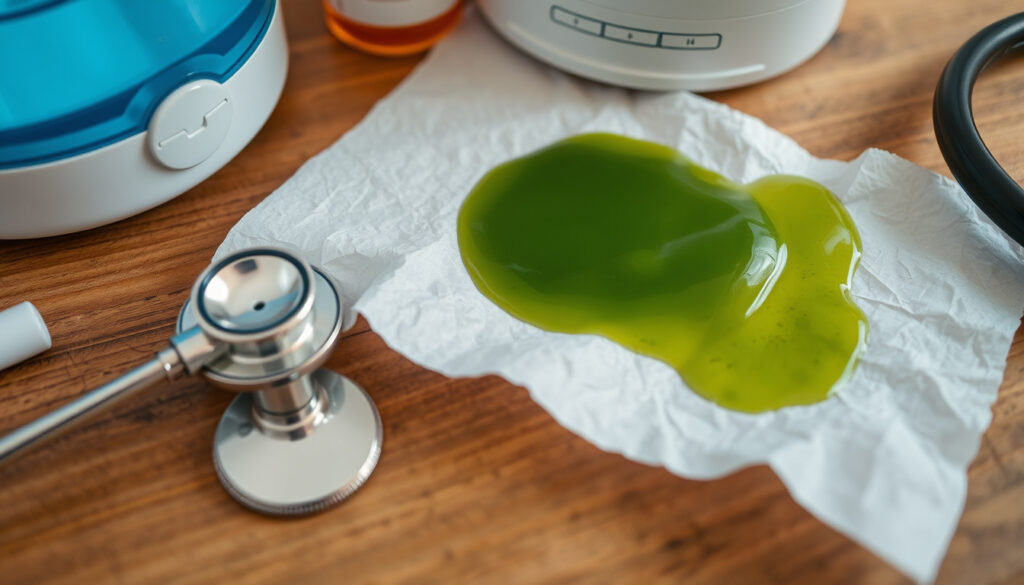
Coughing Up Green Mucus: Causes, Seriousness & Treatment
If you’ve ever spat into a tissue and felt your stomach drop at the sight of green gunk, you’re not alone. That green mucus in your throat or chest can trigger worry—maybe you’ve convinced yourself you need antibiotics or should stay home for a month. The good news: green phlegm is a common symptom, and in most cases it clears up with rest and fluids, not prescriptions. Here’s what science actually says about what’s happening in your airways.
Green mucus cause: Dead white blood cells from infection · Viral bronchitis mucus: White or clear · Bacterial sign: Green or yellow mucus change · Bronchitis main symptom: Hacking cough with mucus · Contagious factor: Viral infections spread cough
Quick snapshot
- Green mucus contains neutrophils (dead white blood cells) fighting infection (Mucinex)
- Green color alone cannot definitively confirm bacterial vs viral infection (Medical News Today)
- Acute bronchitis contagious 1–2 days before symptoms and up to 3–7 days for viral cases (Norton Healthcare)
- Most acute bronchitis cases require rest, fluids, and symptom management—not antibiotics (Mayo Clinic)
The key facts table below summarizes the clinical consensus on green mucus duration, treatment approach, and contagion windows.
| Label | Value |
|---|---|
| Typical duration | 1–3 weeks for bronchitis |
| Antibiotics needed | Rarely, only bacterial confirmed |
| Contagious period | First few days of cough |
| Green mucus source | Dead neutrophils from immune response |
| Bacterial confirmation | Sputum culture required |
| Viral contagion window | 3–7 days typically |
Do I need antibiotics for coughing up green phlegm?
Most people assume green mucus means a bacterial infection that requires antibiotics. However, according to the Mayo Clinic, most acute bronchitis cases are viral and do not require antibiotics. The color of your mucus alone cannot confirm whether bacteria are involved.
Viral vs bacterial infections
When you cough up green phlegm, the green comes from peroxidase enzymes released by neutrophils—white blood cells your immune system dispatches to fight invaders. This process occurs whether the invader is a virus or bacteria. According to Medical News Today, green phlegm does not definitively indicate bacterial infection.
- Acute bronchitis is most often caused by viruses, including those for common cold, flu, RSV, and COVID-19 (Ubie Health)
- Bacterial bronchitis is less common and may require antibiotics if confirmed through testing (Ubie Health)
- Bacteria like mycoplasma and pertussis can cause bacterial bronchitis (GoodRx)
When antibiotics are prescribed
Antibiotics only work against bacterial infections. Taking them for viral bronchitis wastes their power and contributes to antibiotic resistance, warns UMass Memorial Health. Your doctor may order a sputum culture to determine whether bacteria are present before prescribing.
Green mucus alone cannot justify an antibiotic prescription. Thick, foul-smelling green mucus warrants immediate medical attention, but a doctor must confirm bacterial infection through testing before antibiotics apply.
How serious is coughing up green phlegm?
Coughing up green phlegm ranges from mild annoyance to sign of something that needs attention. For most adults, it signals acute bronchitis—an inflammation of the bronchial tubes that carry air into your lungs. The Mayo Clinic notes that mucus in bronchitis can be clear, white, yellow, or green.
Common causes like bronchitis
Acute bronchitis typically follows a respiratory infection and causes a hacking cough that brings up mucus. According to NCBI StatPearls, chronic bronchitis involves excessive mucus production and is strongly linked to smoking—with cumulative incidence reaching 42% in some smoker groups.
- Acute bronchitis cough can last weeks even after you’re no longer contagious (Mayo Clinic)
- Symptoms lasting over 10–14 days or worsening suggest need for evaluation (Ubie Health)
- Lingering cough after 12 days may indicate bacterial bronchitis or sinusitis (Mucinex)
Signs needing medical attention
While green mucus alone isn’t a red flag, certain accompanying symptoms demand a doctor’s visit. Sinus infections can cause green mucus and cough mimicking bronchitis, according to Mucinex.
See a doctor if your cough lasts beyond 3 weeks, you run a high fever, experience chest pain, or notice thick foul-smelling mucus.
Am I contagious if I cough up green mucus?
The question of contagiousness hinges entirely on what’s causing your cough, not the color of your mucus. According to Mayo Clinic, most acute bronchitis is caused by viruses and is contagious.
Viral spread risks
Viruses causing acute bronchitis spread via droplets from coughing, sneezing, and talking, reports Ubie Health. You become contagious 1–2 days before symptoms appear, according to Norton Healthcare.
- Viral acute bronchitis contagious period is typically 3–7 days (Ubie Health)
- Pertussis can remain infectious up to 3 weeks (GoodRx)
- Bacterial bronchitis is less contagious than viral bronchitis (Ubie Health)
Infection type matters
If your green mucus stems from a viral infection, you can spread it to others—especially in the first few days. For bacterial bronchitis, contagiousness stops 24 hours after starting antibiotics, according to Cleveland Clinic. Chronic bronchitis, however, is not contagious.
Green mucus is not a reliable indicator of contagiousness. Infection type and duration matter more than color. Stay home during the first week if you have a viral cough.
Does coughing up green mucus mean getting better?
Many people interpret green mucus as a sign they’re getting worse, but the reality is more nuanced. The green color reflects an active immune response, not necessarily worsening or improving, explains Medical News Today.
Color change meanings
The shift from clear or white mucus to green indicates your immune system has deployed neutrophils to the site. According to Cedars-Sinai academic medical center, green or yellow mucus change may indicate secondary bacterial infection in viral bronchitis. However, green alone is not diagnostic.
- Green or yellow mucus in chronic bronchitis patients is significantly more likely to be bacterial than clear mucus (Mucinex clinical guidelines)
- Mucus color alone does not confirm bacterial infection; sputum culture needed (Medical News Today medical review)
Recovery timeline
Acute bronchitis symptoms typically last up to 3 weeks, reports the Mayo Clinic. As you recover, mucus typically becomes thinner and less colored. Clearing mucus signals the infection is resolving and airways are returning to normal.
How to get rid of a cough with green mucus
Most cases of bronchitis-related green mucus respond well to home care. According to Mucinex symptom guide, hydration, avoiding smoke, and over-the-counter medications help manage symptoms effectively.
Home remedies
Staying hydrated thins mucus, making it easier to clear. Using a humidifier adds moisture to airways. Avoiding smoke and irritants gives your lungs a chance to heal.
- Drink plenty of fluids throughout the day
- Use a cool-mist humidifier in your bedroom
- Avoid smoking and secondhand smoke exposure
- Rest to let your immune system work
Over-the-counter options
Expectorants like guaifenesin help loosen mucus so you can cough it up more effectively. Products like Mucinex Max Strength provide relief for up to 12 hours per dose, according to Mucinex dosage information. Pain relievers can address associated discomfort.
If symptoms persist beyond 12 days or worsen after initial improvement, consult a healthcare provider. Lingering cough may indicate bacterial bronchitis or sinusitis requiring different treatment.
Upsides
- Most cases resolve without antibiotics
- Home remedies often sufficient
- Clear timeline for recovery
- Chronic bronchitis is not contagious
Downsides
- Cough can linger 2–3 weeks
- Antibiotic resistance risk if misused
- Green color often misinterpreted
- Bacterial confirmation requires testing
When to see a doctor
While most green mucus cases resolve at home, certain signs warrant professional evaluation. According to Mucinex symptom guide, thick, foul-smelling green mucus warrants immediate medical attention.
- Cough lasting more than 3 weeks
- High fever lasting several days
- Chest pain or shortness of breath
- Thick, foul-smelling green mucus
- Symptoms worsening after initial improvement
- Presence of blood in mucus
Waiting too long to see a doctor for prolonged symptoms risks complications, especially in older adults or those with underlying lung conditions. Early evaluation provides peace of mind and appropriate treatment.
What the experts say
The mucus color doesn’t indicate anything. Some people think green mucus means bacterial infection, but that’s not always the case.
— Dr. Supakul, UnityPoint Health
Anyone who has contracted a respiratory illness is generally contagious for a day or two before symptoms occur.
— Joshua H. Brandon, M.D., Norton Healthcare
Acute bronchitis is contagious. Most of the time, acute bronchitis is caused by any one of many viruses.
— Mayo Clinic
For most adults, coughing up green mucus means your body is fighting an infection—often acute bronchitis. The green color reflects active immune response, not necessarily a bacterial infection requiring antibiotics. Rest, hydration, and symptom management typically see you through. If your cough drags on past two weeks or you develop concerning symptoms, a healthcare provider can determine whether testing or treatment is warranted.
Related reading: Bleeding From Anus No Pain Causes
Beyond medical evaluation, exploring natural lung mucus remedies can provide supportive relief during bronchitis recovery.
Frequently asked questions
Should I go to work with green phlegm?
If your cough stems from a viral infection, stay home during the first few days when contagion risk is highest. Once fever-free and symptoms improving, returning to work is generally safe even if a cough persists.
What color is pneumonia phlegm?
Pneumonia phlegm can be rust-colored, green, yellow, or bloody. Unlike bronchitis, pneumonia typically involves fever, chills, and chest pain. See a doctor if these symptoms develop.
How to tell the difference between bronchitis and pneumonia?
Bronchitis affects bronchial tubes and typically includes a productive cough with clear to colored mucus. Pneumonia infects lung sacs and often presents with fever, chills, chest pain, and shortness of breath. Imaging may be needed for diagnosis.
What are 5 symptoms of bronchitis?
Five common bronchitis symptoms: hacking cough, mucus production (clear to green), chest discomfort, fatigue, and mild shortness of breath. Fever is typically low-grade if present.
Coughing up green phlegm but no fever—what does it mean?
Green phlegm without fever often indicates your immune system is responding to an infection. Many viral bronchitis cases present without significant fever. Monitor symptoms and seek care if they persist beyond two weeks.
Coughing up green mucus for 2 weeks—is that normal?
Bronchitis coughs commonly last 2–3 weeks. If your cough reaches two weeks without improvement, consult a healthcare provider. Lingering cough after 12 days may indicate bacterial bronchitis or sinusitis.
More related posts
 Best Black Kettle and Toaster Sets in Ireland
 Kendrick Lamar Not Like Us: Feud, Lyrics & Super Bowl
 Tales of the Shire: Game Review, Release & Platforms Guide
 Where to Watch Home Alone: Netflix, Disney+, Prime 2025
 Michael Kors Bags Sale Ireland: Best Deals & Outlets
 Newport Isle of Wight: A Complete Visitor Guide (2025)
 Andy Gibb: Relationships, Cause of Death, and Tragic Life
 Plymouth Argyle vs Leeds United Stats – Head-to-Head and Form Guide