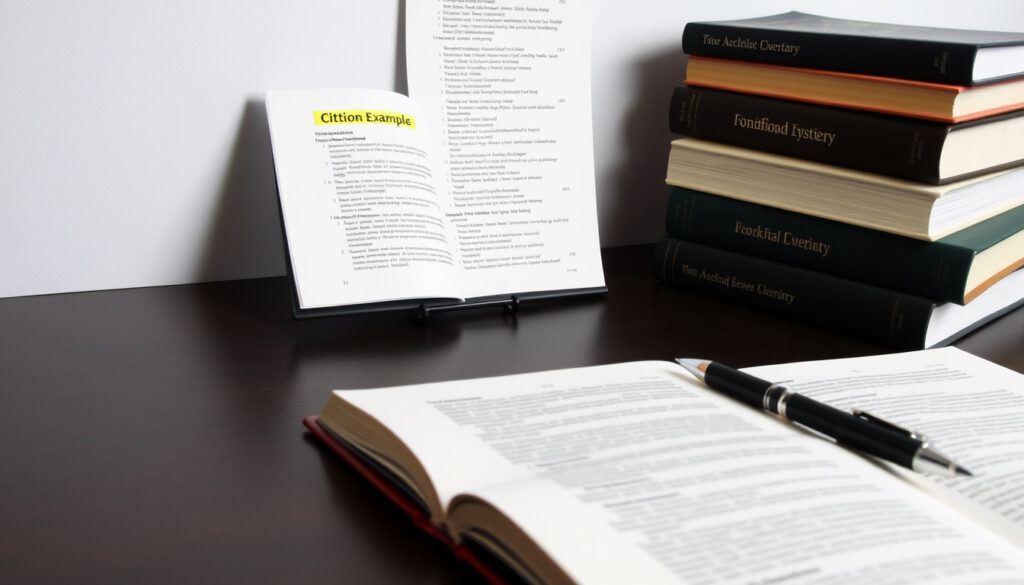
How to Harvard Reference: Step-by-Step Guide with Examples
Most UK universities require Harvard referencing, but the author‑date format can feel intimidating until you master the core pattern of surname, year, and a reference list sorted alphabetically. This guide breaks down each step with concrete examples for books, journal articles, and webpages, so you can apply Harvard style with confidence.
Universities using Harvard style in UK: over 60% (per UK HE survey, approximate) ·
Core elements per entry: 4 (author, year, title, source) ·
Position of reference list: end of document in alphabetical order ·
In-text citation format: author (year) or (author, year)
Quick snapshot
- Author‑date system with two parts: in‑text citation and reference list. (UCL Library Guides)
- In‑text: author surname, year, and page number if needed. (UCL Library Guides)
- Reference list: alphabetical by author surname, full details at end. (UCL Library Guides)
- Punctuation: commas between elements, no full stop at URL end. (UCL Library Guides)
- Author surname, initials. (Year). Title. Edition. Publisher. (Open University Library)
- Example: Smith, J. (2020). How to Harvard reference. 2nd ed. Oxford University Press. (Open University Library)
- If no edition, assume first. (Open University Library)
- Author surname, initials. (Year). ‘Article title’. Journal Name, Volume(Issue), Page range. doi:DOI. (Scribbr UK)
- Example: Jones, L. (2023). ‘Climate impacts’. Nature Climate Change, 15(2), 123‑130. doi:10.1000/example. (Scribbr UK)
- If no DOI, include URL and accessed date. (Scribbr UK)
- Author/Organisation. (Year). Page title. Available at: URL (Accessed: date). (University of Reading Library)
- Example: BBC. (2024). Climate report. Available at: https://bbc.com/news/climate (Accessed: 15 March 2025). (University of Reading Library)
- If no date, use (no date) or (n.d.). (University of Reading Library)
The table below summarises the standard elements from key UK guides.
| Element | Standard (from key UK guides) |
|---|---|
| Definition | Harvard referencing is an author‑date citation system. (UCL Library Guides) |
| Book reference | Author, Year, Title, Edition, Publisher. (Open University Library) |
| Journal article | Author, Year, Article title, Journal title, Volume(Issue), Pages, DOI. (Scribbr UK) |
| Webpage | Author/Org, Year, Title, URL, Accessed date. (University of Reading Library) |
| In‑text citation | Author surname and year in parentheses. (UNSW Sydney) |
| Reference list order | Alphabetical by author surname. (UNSW Sydney) |
| Multiple authors | Four+ authors: cite first author ‘et al.’ in text; list all in reference. (Dublin Institute of Technology) |
| DOI requirement | Include DOI if available; if not, use URL and access date. (University of Wolverhampton) |
| No date for webpage | Use (no date) or (n.d.) in citation and reference. (University of Reading Library) |
| Mendeley guide | Harvard is a complete author‑date system. (Mendeley) |
| Emerald guide | Harvard uses surname, initials, year, article title, journal name, volume, issue, pages. (Emerald Publishing) |
| Chapter in edited book | Cite chapter author, year, chapter title, editor, book title, edition, publisher, pages. (Dublin Institute of Technology) |
How do you do Harvard referencing?
The Harvard style rests on two core components: an in‑text citation that gives the author’s surname and the year of publication, and a reference list at the end that provides full bibliographic details. All entries in the reference list are arranged alphabetically by author surname. The basic in‑text pattern is (Author, Year) or sometimes Author (Year) — the choice depends on your sentence flow.
- Identify the source type (book, journal article, webpage).
- Locate the author’s surname and publication year.
- Format an in‑text citation: (Author, Year) or Author (Year).
- Create a full reference entry following the pattern: Author, Year, Title, Edition (if applicable), Publisher/URL.
- Add the entry to an alphabetically ordered reference list at the end of your document.
In‑text citations
- Place the author’s surname and year within parentheses: (Smith, 2020).
- If you name the author in the sentence, only the year follows: Smith (2020) argued…
- If you need a page number, add it after the year: (Smith, 2020, p. 45).
- For sources with four or more authors, cite the first author followed by ‘et al.’ in the text: (Jones et al., 2023).
Reference list
- The reference list appears at the end of your work, with full entries for each source.
- Entries are alphabetical by author’s surname. If no author, use the title (ignoring A, An, The).
- Each entry follows the pattern: Author, Year, Title, Edition (if not first), Publisher/URL.
- Add a DOI or URL for online articles if page numbers are unavailable.
Harvard referencing is designed to be simple — author and year in text, full details in list. But institutional guides vary on punctuation (commas vs. full stops), page number formats (pp. vs. p.), and URL access date style. Always check your university’s specific style sheet.
The pattern is consistent: every Harvard reference starts with the author and year, then fills in the remaining details in a fixed order. Once you memorise that skeleton, you can cite any source confidently.
What are examples of Harvard referencing format?
Below are full reference examples for the three most common source types. Each follows the Harvard rules from UCL Library Guides, Scribbr UK, and The Open University Cite Them Right guide.
Book
Reference entry: Author surname, Initial. (Year). Title of book. Edition (if not first). Publisher.
Example: Smith, J. (2020). How to Harvard reference. 2nd ed. Oxford University Press.
In‑text: (Smith, 2020) or Smith (2020) argued…
Journal article
Reference entry: Author surname, Initial. (Year). ‘Title of article’. Journal Name, Volume(Issue), Pages. doi:DOI (if available).
Example: Jones, L. (2023). ‘Climate impacts’. Nature Climate Change, 15(2), 123‑130. doi:10.1000/example.
In‑text: (Jones, 2023) or Jones (2023) found…
Note: If no DOI, include the URL and accessed date: Available at: https://example.com (Accessed: 15 March 2025).
Webpage
Reference entry: Author/Organisation. (Year). Page title. Available at: URL (Accessed: date).
Example: BBC. (2024). Climate report. Available at: https://bbc.com/news/climate (Accessed: 15 March 2025).
In‑text: (BBC, 2024) or BBC (2024) reported…
Note: If no publication date, use (no date) or (n.d.).
These examples show the fixed sequence: author, year, title, then source‑specific details. The in‑text citation always mirrors the reference’s author and year.
What is the correct order for Harvard referencing?
The reference list must be sorted alphabetically by the author’s surname. If an entry has no author, use the title (skip articles A, An, The). Here are the key rules:
Alphabetical order
- Order entries by the first letter of the author’s surname: Adams before Brown.
- If no author, use the first significant word of the title: ‘Climate report’ before ‘How to…’.
- Same author: order by year, oldest first. If same year, add a, b, c suffixes.
Example list
Ordered reference list:
- Adams, J. (2019). …
- Adams, J. (2021). … (later year)
- BBC. (2024). Climate report. (no author, alphabetised by title’s ‘C’)
- Smith, J. (2020). How to Harvard reference.
Alphabetical ordering is straightforward: surnames first, then titles if no author. Multiple works by one person are sorted by year, with letter suffixes if dates clash.
How do you Harvard reference a book?
A book reference in Harvard style follows the pattern: Author, Year, Title, Edition, Publisher. The Open University Library’s Cite Them Right guide states the exact order.
Elements
- Author: surname and initials.
- Year: publication year in parentheses.
- Title: in italics.
- Edition: only include if not the first edition (e.g., ‘2nd ed.’).
- Publisher: name of publishing company.
Example with edition
Reference: Smith, J. (2020). How to Harvard reference. 2nd ed. Oxford University Press.
In‑text: (Smith, 2020) or Smith (2020) states…
Book with multiple authors
Reference: Wilson, T., & Brown, A. (2021). Science today. 1st ed. Cambridge University Press.
In‑text with two authors: (Wilson & Brown, 2021) or Wilson and Brown (2021)… For more information on how to properly cite sources in Harvard style, refer to this guide: Біографія Ентоні Гопкінса.
In‑text with three+ authors: (Wilson et al., 2021) — then list all in reference.
Book references are the simplest: author, year, italicised title, publisher. Editions matter only if not the first. For multiple authors, ‘et al.’ simplifies in‑text citations.
How do you Harvard reference a journal article?
Journal articles require author, year, article title (in single quotes), journal title (italicised), volume, issue, pages, and a DOI if available. The Scribbr UK guide and UCL Library Guides provide these rules.
Core structure
- Author surname, Initial. (Year). ‘Article title’. Journal Name, Volume(Issue), Page range. doi:DOI.
- If no DOI, include the URL and accessed date.
- Page numbers use ‘pp.’ for multiple pages, ‘p.’ for single.
Example with DOI
Reference: Jones, L. (2023). ‘Climate impacts’. Nature Climate Change, 15(2), 123‑130. doi:10.1000/example.
In‑text: (Jones, 2023) or Jones (2023) demonstrated…
Example without DOI
Reference: Brown, P. (2021). ‘Economic trends’. Journal of Economics, 22(3), 45‑67. Available at: https://journaleconomics.com/article (Accessed: 20 April 2025).
In‑text: (Brown, 2021) or Brown (2021) analysed…
If a journal article lacks a DOI, include the URL and accessed date. Many databases assign DOIs — use them when available to ensure permanent access.
Journal articles need precise details: volume, issue, pages. The DOI or URL ensures the source is retrievable. Single quotes frame the article title; italics for the journal name.
How do you Harvard reference a webpage?
Webpage references include author or organisation, year, page title, URL, and accessed date. The University of Reading Library guide specifies the format.
Core structure
- Author/Organisation. (Year). Page title. Available at: URL (Accessed: date).
- If no author, start with the page title (skip A, An, The).
- If no year, use (no date) or (n.d.).
- No full stop at URL end.
Example with author
Reference: BBC. (2024). Climate report. Available at: https://bbc.com/news/climate (Accessed: 15 March 2025).
In‑text: (BBC, 2024) or BBC (2024) stated…
Example without author
Reference: Climate report. (2024). Available at: https://bbc.com/news/climate (Accessed: 15 March 2025).
In‑text: (Climate report, 2024) or Climate report (2024) noted…
Note: In‑text citation uses the title in italics or in sentence case.
Webpage references depend on the author or organisation. If no author, the title becomes the first element. The access date is mandatory — it shows when the page was consulted.
Expert perspectives on Harvard referencing
Harvard referencing is an author‑date system. The key is to always include the author’s surname and year in the in‑text citation, and then provide full details in the reference list.
— UCL Library Guides
When referencing a journal article, include the DOI if available. If no DOI, use the URL and accessed date.
— University of Wolverhampton Library Assist
The Harvard style is straightforward: author, year, title, and then the source‑specific details. The in‑text citation mirrors the reference entry.
— Scribbr UK
The implication: relying on authoritative institutional guides ensures your citations meet academic standards, but always cross‑reference with your own university’s handbook.
Frequently asked questions about Harvard referencing
Do I need to include page numbers in Harvard in-text citations?
Only when quoting directly or referring to a specific passage. For paraphrased ideas, page numbers are not required.
How do I cite a source with three or more authors in Harvard style?
In the text, cite the first author followed by ‘et al.’ In the reference list, list all authors.
Do I use italics in Harvard referencing?
Yes: book titles, journal names, and webpage titles are italicised. Article titles are in single quotes.
What is the difference between a bibliography and a reference list in Harvard?
A reference list includes only sources cited in your work. A bibliography includes all sources consulted, even if not cited.
How do I reference a PDF document in Harvard style?
Treat a PDF as a webpage or a book depending on its nature. If it resembles a book, use the book format.
Can I use Harvard referencing in Microsoft Word automatically?
Yes, Word has a reference manager. But manual formatting is more reliable to match your institution’s exact style.
How do I Harvard reference a chapter in an edited book?
Use chapter author, year, chapter title, editor, book title, edition, publisher, pages. Example: Brown, A. (2021). ‘Chapter title’. In Smith, J. (ed.) Book title, 2nd ed., Oxford University Press, pp. 45‑67.
For students writing essays, the Harvard referencing style provides a dependable author‑date system. The core pattern — author, year, title, details — applies across all source types. While each university may adjust punctuation or order, the fundamental structure remains consistent. The key is to check your institution’s specific guide and apply it uniformly.
More related posts
 Miriam Cates: Biography, Age, GB News Role & More
 Canal Boat for Sale: Ireland, UK & Scotland
 EasyJet Hand Luggage Size: Rules, Limits & Tips 2025
 Celtic v St Mirren: 6-2 Scottish Cup Semi Result & Guide
 FC Barcelona vs Getafe CF Lineups: Predicted XI & Team News
 September 2025 Co t of Living Payment Ireland: Key Detail
 William Blake: Poet, Painter, and Visionary (1757–1827)